Niacin

Niacin

We have published two articles on high-density lipoprotein (HDL, or “good cholesterol”) raising drugs on this blog:

The more recent of these article has received quite a few hits lately. This is probably because of recent news of a clinical trial failure in the HDL drug field. It therefore seems appropriate to publish an update on HDL-raising drug clinical trials, in order to bring our blog up to date.

Update on the trials and tribulations of niacin-based HDL-raising drugs

As of the time of our June 1, 2011 article, high-dose niacin was the only drug that was approved by the FDA for raising HDL. However, generic high-dose niacin can cause adverse effects such as skin flushing and itching. Therefore, two companies, Abbott and Merck, were developing high-dose niacin-based products designed to reduce these adverse effects.

In May 2011, as discussed in our June 1, 2011 article, the National Heart Lung and Blood Institute (NHLBI) of the National Institutes of Health (NIH) stopped a large clinical trial (known as AIM-HIGH) of Abbott’s Niaspan, an extended-release formulation of high-dose niacin, because the drug failed to prevent heart attacks and strokes. There was also a small increased rate of strokes in patients taking Niaspan, which researchers cautioned may have been due to chance. Niaspan remains an FDA-approved drug, and it is now owned by Abbot spin-off AbbVie. However, Niaspan is scheduled to go off-patent later in 2013.

Merck’s high-dose non-flushing niacin product is known as Tredaptive or Cordaptive in different markets. It is a combination product consisting of extended-release high dose niacin plus laropiprant. Laropiprant is designed to block the ability of prostaglandin D2 to cause skin flushing; niacin-induced skin flushing works via the action of prostaglandin D2 in the skin.

In 2008, the FDA rejected Merck’s New Drug Application for Tredaptive/Cordaptive, so the drug remained investigational in the US. However, in 2009 Merck launched Tredaptive in international markets including Mexico, the UK and Germany. The drug has been approved in over 45 countries. Merck had also been conducting a 25,000-person trial of Tredaptive for reducing the rate of cardiovascular events in patients who are at risk for cardiovascular disease (CVD). Merck intended to file for approval of the drug in the US in 2012, based on the results of this trial if it had been positive.

However, on December 20, 2012, Merck announced that its clinic trial of Tredaptive, known as the HPS2-THRIVE Study (Heart Protection Study 2-Treatment of HDL to Reduce the Incidence of Vascular Events), did not achieve its primary endpoint.

As a result of this finding, Merck does not plan to seek regulatory approval for this medicine in the United States. It also–as of January 11, 2013–began a recall of Tredaptive in the 40 countries in which it had been approved. The  HPS2-THRIVE Study not only showed that Tredaptive was of no benefit in reducing cardiovascular events in high-risk patients on statins, but it also significantly raised the incidence of such adverse effects as blood, lymph and gastrointestinal problems, as well as respiratory and skin issues.

The results of a new study published online on February 26 2013 showed that around a quarter of all patients taking the niacin/laropiprant combination Tredaptive had dropped out of the trial–compared to fewer than 17% in the placebo arm.  This was mostly due to itching, rashes, indigestion and muscle problems. There were also dozens of serious reactions, including 29 cases of myopathy.

Skin-related adverse effects seen in some patients with Tredaptive resemble those seen with high-dose niacin. The addition of laropiprant was supposed to ameliorate these adverse effects, but may not have done so in all patients. As for the serious adverse effects such as myopathy, several medical researchers assert that it is not known whether niacin, laropiprant or drug-drug interactions between these two agents and/or the statin (simvastatin) used in the study was responsible. Simvastatin is known to have adverse interactions with certain other drugs. Moreover, one-third of subjects enrolled in HPS2-THRIVE were Chinese, a patient population that is known to be more sensitive to the effects of statins, especially the 40-milligram dose of simvastatin used in the trial. It was the Chinese patients enrolled in the trial who showed the highest risk of myopathy.

In addition, some of the researchers question whether laropiprant is a “clean drug” that has no effects on atherosclerosis and thrombosis. A recent study has shown aneurysm formation and accelerated atherogenesis in mice with deleted prostaglandin D2 receptors; these receptors are the target of laropiprant. Thus the use of laropiprant may have been a factor in the failure of the trial, as well as in the adverse effects seen in patients treated with the niacin/laropiprant combination.

Full results of the HPS2-THRIVE study will be presented by lead investigator Dr Jane Armitage (Oxford University, UK) on March 9, 2013 at the American College of Cardiology 2013 Scientific Sessions (San Francisco, CA.)

Thus–although generic niacin and Niaspan remain FDA-approved HDL-raising drugs–the results of the AIM-HIGH and the HPS2-THRIVE studies have put niacin-based HDL-raising drugs–and the whole HDL-raising drug field–under a cloud.

Update on development of CETP inhibitors

As discussed in our earlier articles, the development of cholesteryl ester transfer protein (CETP) inhibitors has been a particular focus of several pharmaceutical companies.  CETP catalyzes the transfer of cholesteryl esters and triglycerides between LDL/VLDL and HDL, and vice versa. In vivo (in animals and in humans), CETP inhibitor drugs raise HDL and lower LDL.

The clinical failure of Pfizer’s CETP inhibitor torcetrapib in 2006 put a severe damper on development of drugs in this class. However, the toxicity of torcetrapib was found to be due to an off-target effect, and other CETP inhibitors do not display this toxicity. Thus companies have been developing three CETP inhibitors: Roche’s dalcetrapib, Merck’s anacetrapib, and Lilly’s evacetrapib.

However, on May 7, 2012 Roche announced that it had–following the recommendation of an independent group of experts (the Data and Safety Monitoring Board)–halted its Phase 3 trial of dalcetrapib “due to a lack of clinically meaningful efficacy.”

Dalcetrapib’s lack of efficacy might possibly be due to its relatively low potency in raising HDL. Dalcetrapib boosted HDL by 30%, as compared to 138% for anacetrapib and 130% for evacetrapib, depending on the dose. Moreover, anacetrapib and evacetrapib, unlike dalcetrapib, also lower LDL (“bad cholesterol”).

Currently, anacetrapib and evacetrapib are being evaluated in large Phase 3 clinical trials–REVEAL (Randomized EValuation of the Effects of Anacetrapib Through Lipid-modification) and ACCELERATE (A Study of Evacetrapib in High-Risk Vascular Disease), respectively.

Is HDL-raising drug development high-stakes gambling or rational clinical research?

Given the lack of success–so far–in developing a safe HDL-raising drug that lowers the frequency of cardiovascular events in high-risk patients, some commentators speculate that attempting to develop HDL-raising drugs such as CETP inhibitors might be a form of high-stakes gambling. Chemist and leading pharmaceutical industry blogger Derek Lowe in particular takes this point of view. As we discussed in our June 1, 2011 article, the biology of HDL is complex. For example, HDL particles in blood serum are heterogeneous, with some HDL particles having a greater degree of positive effects on atherosclerotic plaque biology than others. As a result, treatments (e.g., drugs, diet) that raise HDL, as determined by standard clinical assays for serum HDL, may not necessarily result in clinical benefit, because of qualitative changes in populations of HDL particles.

The unknowns of HDL biology, combined with the need to conduct huge expensive clinical trials and the big payoffs for success in the large dyslipidemia market, convinced Derek Lowe that CETP inhibitor development more resembles gambling (in which only Big Pharmas can play) than rational clinical research. The same, according to Lowe, applies to Alzheimer’s disease drug development. According to Lowe, Big Pharmas may be undertaking these “go-for-the-biggest-markets-and-hope-for-the-best” research undertakings because they think that success in large markets are the only things that can rescue them.

Nevertheless, Steven Nissen, M.D. (chief of cardiovascular medicine at Cleveland Clinic), a veteran HDL researcher who has often been critical of the pharmaceutical industry, persists in running clinical studies of novel HDL-raising drugs. Although he considered dalcetrapib a “long-shot”, he continues to believe that anacetrapib and evacetrapib have a reasonable chance of success. And he has expressed particular enthusiasm for anacetrapib.

Dr. Nissen is involved in clinical trials of Resverlogix’s epigenetic agent RVX-208, a first-in-class small-molecule drug related to resveratrol that induces endogenous production of the protein component of HDL, apolipoprotein A1. On August 28, 2012, Resverlogix reported that RXV-208 significantly increased HDL-C, the primary endpoint of a Phase 2b clinical trial known as SUSTAIN. SUSTAIN also successfully met secondary endpoints–showed increases in levels of Apo-AI and large HDL particles. Both of these are believed to be important factors in enhancing reverse cholesterol transport activity. Safety data from SUSTAIN indicate that increases in the liver enzyme alanine aminotransferase (ALT) reported in previous trials were infrequent and transient, with no new increases observed beyond week 12 of the 24-week trial. Thus the drug appears to be suitable for chronic use.

Thus, despite the features of CETP-inhibitor clinical trials that resemble high-stakes gambling, we must wait for the results of the clinical trials to draw any meaningful conclusions about the prospects for development of these agents. Moreover, other approaches to developing HDL-raising drugs, such as Resverlogix’ epigenetic strategy, may turn out to be superior to older approaches. And as with Alzheimer’s disease, continuing studies on the basic biology of HDL may eventually yield breakthrough strategies to discovery and development of novel antiatherosclerotic drugs.

_________________________________________

As the producers of this blog, and as consultants to the biotechnology and pharmaceutical industry, Haberman Associates would like to hear from you. If you are in a biotech or pharmaceutical company, and would like a 15-20-minute, no-obligation telephone discussion of issues raised by this or other blog articles, or of other issues that are important to  your company,  please contact us by phone or e-mail. We also welcome your comments on this or any other article on this blog.

NBD1 of human CFTR. Source: PDBbot http://bit.ly/11UmpkS

NBD1 of human CFTR. Source: PDBbot http://bit.ly/11UmpkS

A major objective of research in genomics is to identify mutations that cause genetic diseases. However, doing so does not necessarily directly enable researchers to discover and develop drugs to treat these diseases.

Two examples of genetic diseases whose causes were identified decades ago, without directly enabling the development of any disease-modifying drug, are sickle cell disease (SCD) (also known as sickle cell anemia) and cystic fibrosis (CF).

Sickle cell disease

The causative mutation of SCD was identified by protein researchers, decades before the era of genomics. Vernon M. Ingram, Ph.D. showed in 1957 that a glutamic acid to valine mutation at position 6 of the β-chain of hemoglobin was the sole abnormality in SCD. For this discovery, Dr. Ingram has been called The Father of Molecular Medicine. Dr. Ingram’s work was made possible by a 1949 study by Linus Pauling and his colleagues, which showed that SCD hemoglobin had a different electrophoretic mobility than normal hemoglobin. Thus the sickle cell trait was likely to be due to a mutation in the β-hemoglobin gene that changed its amino acid composition, as confirmed by Dr. Ingram.

Yet to this day, although SCD (which occurs in individuals who are homozygous for the sickle-cell mutation) can be managed by various treatments (such as hydroxyurea and blood transfusions and bone marrow transplants) that can result in survival into one’s fifties, there is no mechanism-based therapy for this disease. Thus the identification of the causative mutation of SCD has not led to any treatments.

The reason why discovery and development of drugs for SCD has been so very difficult is that the mutation that causes this disease affects an intracellular protein, hemoglobin, which is neither a receptor nor an enzyme. Unlike secreted proteins such as insulin, it is not possible to develop protein drugs to replace missing or defective hemoglobin. It is also not possible to replace the missing function of normal hemoglobin by treatment with a small molecule drug.

Diseases such as SCD–in which the function of an essential intracellular protein is defective or missing–have often been cited as candidates for gene therapy.

However, as we discussed in our October 11, 2012 and our November 8, 2012 Biopharmconsortium Blog articles, it is only this past fall that the first gene therapy was approved for marketing in a regulated market. As we discussed in the first of these articles, gene therapy has a history going back to at least the early 1970s. However, gene therapy has displayed the characteristics of a premature technology. Several notable failures, including some that caused the deaths of patients, put a severe damper on the gene therapy field. Only recently–between around 2003 and 2012–have researchers been developing more advanced gene therapy technologies and conducting clinical studies, with some success. Entrepreneurs have also been building gene therapy specialty companies to commercialize this research.

As also we discussed in our October 11, 2012 article, among the many companies that are developing gene therapies, bluebird bio (Cambridge, MA) has been singled our for special attention lately. Among the diseases being targeted by bluebird bio are SCD, and beta-thalassemias, which are also genetic diseases that affect hemoglobin. bluebird bio is in Phase 1/2 trials for its beta-thalassemia therapy, and in Phase 1 for its SCD program.

Cystic fibrosis

CF causes a number of symptoms, which affect the skin, the lungs and sinuses, and the digestive, endocrine, and reproductive systems. Notably, people with CF accumulate thick, sticky mucus in the lungs, resulting in clogging of the airways due to mucus build-up. This leads to inflammation and bacterial infections. Ultimately, lung transplantation is often necessary as the disease worsens. With proper management, patients can live into their late 30s or 40s.

The affected gene in CF and the most common mutation that causes the disease (called ΔF508 or F508del) were identified by Francis S Collins, M.D., Ph.D. (then at the Howard Hughes Medical Institute and Departments of Internal Medicine and Human Genetics, University of Michigan, Ann Arbor, MI) and his colleagues in 1989. Dr. Collins was subsequently the leader of the publicly-funded Human Genome Project and is now the Director of the U.S. National Institutes of Health, Bethesda, MD.

The gene that is affected in cystic fibrosis encodes a protein known as the cystic fibrosis transmembrane conductance regulator (CFTR).  CFTR regulates the movement of chloride and sodium ions across epithelial membranes, including the epithelia of lung alveoli. CF is an autosomal recessive disease, which is most common in Caucasians; one in 2000–3000 newborns in the European Union is found to be affected by CF. ΔF508 is a deletion of three nucleotides that causes the loss of the amino acid phenylalanine at position 508 of the CFTR protein. The ΔF508 mutation accounts for approximately two-thirds of CF cases worldwide and 90% of cases in the United States. However, there are over 1500 other mutations that can cause CF.

In the case of CF, the affected protein, CFTR, is an ion channel–specifically a chloride channel.

Ion channels constitute an important class of drug targets, which are targeted by numerous currently marketed drugs, e.g., calcium channel blockers such as amlodipine (Pfizer’s Norvasc; generics) and diltiazem (Valeant’s Cardizem; generics). These compounds were mainly developed empirically by traditional pharmacology before knowing anything about the molecular nature of their targets. However, discovery of novel ion channel modulators via modern molecular methods has proven to be challenging, mainly because of the difficulty in developing assays suitable for drug screening. In addition, development of suitable assays for assaying chloride channel function has lagged behind the development of assays for the function of cation channels (e.g., sodium and calcium channels).

Moreover the most common CFTR mutation that causes CF, ΔF508, results in defective cellular processing, and the mutant CTFR protein is retained in the endoplasmic reticulum. In the case of some other mutant forms of CTFR (accounting for perhaps 5% of CF patients), the mutant proteins reach the cell membrane, but are ineffective in chloride-channel function.

Given these difficulties, researchers first attempted to develop gene therapies for CF. Genzyme (a Sanofi company since 2011) has been a leader in developing gene therapy for CF, and has been conducting research in this area since the 1990s. However, as with most gene therapies, development of treatments capable of reaching the market has been elusive.

Genzyme is still researching gene therapies for CF, as are others. An academic group in the U.K., known as the U.K. Cystic Fibrosis Gene Therapy Consortium is working to develop CF gene therapies, using Genzyme’s nonviral cationic lipid vector GL67 (Genzyme lipid 67) as the delivery vehicle. GL67 is the current “gold-standard” for in vivo lung gene transfer. Recently, the Consortium received funding from the U.K. Medical Research Council and National Institute of Health Research to continue its Phase 2B trial of its CF gene therapy product,GL67A/pGM169. This is a combination of GL67 and plasmid DNA expressing CFTR (pGM169).

Very recently, R&D on disease-modifying small-molecule drugs for CF has begun to bear fruit. In January 2012, the FDA approved the first such drug, ivacaftor (Vertex’ Kalydeco.) In July 2012, Vertex received European approval for this drug. Ivacaftor only works in patients with the G551D  (Gly551Asp) mutation in CFTR, which only accounts for around 4% of CF patients. Vertex and other companies–including Genzyme–are working on development of other small-molecule disease-modifying drugs with the potential to treat greater numbers of CF patients.

We shall discuss the new wave of disease-modifying CF drugs, including ivacaftor, in a later post on this blog.

Conclusions

SCD and CF are two examples of cases in which the identification of the genetic or molecular cause of a disease did not directly lead to new treatments. In the case of SCD, even though over 55 years have elapsed since the identification of the genetic cause of the disease, no therapy had yet emerged from this discovery. In the case of CF, it took over two decades from the identification of the molecular cause of the disease to the approval of the first disease-modifying drug.

Many other cases in which molecular targets involved in disease have been identified also lack disease-modifying treatments because the targets are “undruggable”. This especially applies to protein-protein interactions (PPIs). However, PPIs have assumed increasing strategic importance in drug discovery and development in recent years, and researchers and companies have been developing new technologies and strategies to discover  developable drugs that address PPIs.

Back in the early 2000s, researchers and commentators hailed the sequencing of the human genome as heralding a new era in drug discovery and development. However, the “industrialized biology” approach that grew out of the genomics of that era gave very few successes in terms of drug development. Now–a decade later–we have next-generation sequencing and  are approaching the “$1000 genome.” Once again, at least some commentators are expecting immediate breakthroughs in therapeutic development to come out of these breakthroughs in sequencing technology. Others, such as CFTR gene discoverer Francis Collins, believe that we can “speed the development of genetic advances into treatments” by more rapidly weeding out “what turn out to be..nonviable compounds.”

However, in the case of CF there were barriers to drug discovery, such as limited understanding of disease biology and difficulties in assay development, that were the true causes of lack of progress in developing disease-modifying genes. Moreover, once they had good assays, researchers needed to come up with effective strategies to develop small-molecule drugs for CF. In the case of SCD, because of the nature of the target, only gene therapy–with its manifold difficulties–had any hope of addressing the disease. In the case of PPIs, there was the need to discover new breakthrough strategies to address these “undruggable” targets.

Thus, despite breakthroughs in sequencing technologies, determining of disease-related sequences is likely to only be the first step in effective discovery of disease-modifying drugs. And there may continue to be a considerable time lag between sequence determination and drug development.

________________________________

As the producers of this blog, and as consultants to the biotechnology and pharmaceutical industry, Haberman Associates would like to hear from you. If you are in a biotech or pharmaceutical company, and would like a 15-20-minute, no-obligation telephone discussion of issues raised by this or other blog articles, or an initial one-to-one consultation on an issue that is key to your company’s success, please contact us by phone or e-mail. We also welcome your comments on this or any other article on this blog.


Happy New Year from Haberman Associates!

Happy New Year from Haberman Associates!

In our November 20, 2012 article on this blog, entitled “Novel hypercholesterolemia drugs move toward FDA decisions”, we discussed two drugs–Aegerion Pharmaceuticals’ lomitapide, and Isis/Sanofi/Genzyme’s mipomersen. In October 2012, the FDA’s Endocrinologic and Metabolic Drugs Advisory Committee recommended that both drugs be approved for treatment of homozygous familial hypercholesterolemia (HoFH).

In that article, we discussed issues involved in the development and commercialization of lomitapide–a small-molecule drug, and mipomersen–an antisense oligonucleotide, for treatment of HoFH, a rare genetic disease which is mechanistically related to more common types of hypercholesterolemia. We also stated that were were awaiting FDA action–expected in the next several weeks after publication of our article–on the approval of the two drugs.

On Christmas Eve–December 24, 2012–a day on which few people in the United States and in many other countries were thinking about work–Aegerion (Cambridge, MA) announced that the FDA had approved lomitapide for treatment of HoFH. Lomitapide has been given the brand name Juxtapid.

The FDA based its approval of lomitapide on the results of a pivotal Phase 3 study, which evaluated the safety and effectiveness of the drug in 29 adult patients with HoFH. As we discussed in our November 20, 2012 article, the results of this study were published in the online version of The Lancet on November 2, 2012.

As we also discussed in our earlier article, lomitapide has serious adverse effects, including hepatic fat accumulation and elevated liver aminotransferase levels. According to the December 24, 2012 Aegerion press release, the most common adverse reactions seen in the Phase 3 study were gastrointestinal, including diarrhea, nausea, vomiting, dyspepsia and abdominal pain. Ten of the 29 patients in the study had at least one elevation in liver enzymes greater than or equal to three times the upper limit of normal. Liver enzyme elevations were managed through dose reduction or temporary discontinuation of dose. Hepatic fat accumulation was also observed in the Phase 3 trial.

As we also discussed in our earlier article, a finding of elevated liver aminotransferase levels is enough to stop development of most drugs. As of October 2012, the FDA and its Advisory Panel believed that a risk evaluation and mitigation strategy (REMS) would support appropriate use of these drugs in patients with homozygous FH, because of their life threatening disease, and because they have limited therapeutic options.

According to the December 24, 2012 Aegerion press release, the label for lomitapide contains a Boxed Warning citing the risk of hepatic toxicity. A Boxed Warning is the strongest warning that the FDA requires.

Lomitapide is avaiable only through the Juxtapid Risk Evaluation and Mitigation Strategy (REMS) Program. Aegerion will certify all health care providers who prescribe Juxtapid and the pharmacies that will dispense the medicine.

The goals of the REMS are:

  • To educate prescribers about the risk of hepatotoxicity associated with the use of lomitapide, and the need to monitor patients during treatment with the drug.
  • To restrict access to therapy with lomitapide to patients with a clinical or laboratory diagnosis consistent with HoFH.

The safety and efficacy of lomitapide have not been established in patients with hypercholesterolemia who do not have HoFH. The effects of the drug on cardiovascular morbidity and mortality has not been determined. The safety and effectiveness of lomitapide have not been established in pediatric patients.

In addition to establishing the REMS, Aegerion has made a commitment to the FDA to conduct a post-approval, observational cohort study.  The company has also developed a comprehensive support services program for patients and their healthcare providers.

As we discussed in our November 20, 2012 article, Aegerion will be marketing lomitapide on its own, without a larger partner, and has been ramping up its marketing and sales organization in anticipation of approval. The company has set up a website for the product, www.juxtapid.com.

We await the FDA’s decision on the approval of mipomersen, to see how this chapter in the hypercholesterolemia drug development story will unfold.

________________________________

As the producers of this blog, and as consultants to the biotechnology and pharmaceutical industry, Haberman Associates would like to hear from you. If you are in a biotech or pharmaceutical company, and would like a 15-20-minute, no-obligation telephone discussion of issues raised by this or other blog articles, or an initial one-to-one consultation on an issue that is key to your company’s success, please contact us by phone or e-mail. We also welcome your comments on this or any other article on this blog.
 

Agios Germanos, Greece. Source: http://bit.ly/YRDIBJ

Agios Germanos, Greece. Source: http://bit.ly/YRDIBJ

I was quoted in an article in the November 19, 2012 issue of Chemical & Engineering News (C&EN) by senior editor Lisa M Jarvis. The article is entitled

The article focuses on Agios Pharmaceuticals’ (Cambridge, MA) strategy for building a company that can endure as an independent firm over a long period of time, and that can also demonstrate sustained performance.

This contrasts with the recent trend toward “virtual biotech companies”–lean companies with only a very few employees that outsource most of their functions, and that are designed for early acquisition by a Big Pharma or large biotech company. The virtual company strategy is designed to deal with the inability of most young biotech companies to go public in the current financial environment. Without the ability to go public, young companies cannot provide early-stage venture capital investors with a profitable exit within a few years after launching the company. Virtual companies typically have a few assets, such as molecules that are ready for preclinical studies or early clinical trials. The goal is to obtain enough evidence that their compounds can become drugs to interest a Big Pharma.

In contrast, there are a few young  “platform companies” that are built on a broad technology platform, which aim to address important areas of biology and potentially to develop numerous products with the potential to address important areas of unmet medical need. One of these is Agios.

“Built to Last” in the current biotech ecosystem

In the C&EN article, I was quoted as saying that only a few platform companies have been launched in recent years. In the Boston area, in addition to Agios, such companies include Forma Therapeutics and Aileron Therapeutics. I was further quoted as saying “These companies are built to last.”

That brings up the old business paradigm from the 1990s and early 2000s–“Built to Last” versus “Built to Flip”. Those involved in building virtual biotech companies–especially venture capitalists and angel investors–do not like the use of “Built to Flip” to characterize their companies. And there are some fine virtual biotechs–some, such as Energesis and Zafgen–which we have covered in our blog.

(Plexxikon, the developer of targeted melanoma drug vemurafenib, also operated as a virtual company. However, it had a technology platform, and had the potential to become an independent biotech with marketed products. Thus Plexxikon did not fit the usual “virtual biotech model”. Nevertheless, it was acquired by Daiichi Sankyo in 2011.)

However, some industry commentators believe that “Built to Flip” is an appropriate designation for virtual biotech companies, and that the virtual model is likely to be detrimental to drug discovery and to the biotech/pharma industry as a whole.

Meanwhile, the 2012 BIO International Convention in Boston had a session entitled “Moving the Goal Posts: How to Build a Free-Standing Biotech from Scratch in Today’s Environment.” This session focused on how to build the “next Vertex or even the next Genentech” (i.e., a “Built to Last” biotech company) in today’s environment. John Evans, the Vice President of Business Development & Operations of Agios was a speaker at that session. The session was moderated by Bruce Booth of Atlas Ventures. Thus, despite the preference for lean virtual biotech companies in the current funding environment, there is an interest in the entrepreneurial and venture capital communities for how free-standing biotechs might emerge under current conditions.

How to build a young platform biotech company

The Biopharmconsortium Blog has included three articles about Agios:

These articles, as well as the November 19 2012 C&EN article, outline how Agios has been building a free-standing biotech in today’s unfavorable environment. Agios’ strategy is based on three elements:

  • A stellar group of scientific founders–Drs. Craig B. Thompson, Tak W. Mak, and Lewis C. Cantley.
  • A strong proprietary technology platform based on cancer metabolism
  • A financing strategy that includes both venture capital and partnerships with established companies. In the case of Agios, their partner is Celgene. The Agios/Celgene partnership provides Agios with $150 million, and allows Agios to maintain control over the direction of its early stage research.

As stated in the C&EN article, the financial security gained via Agios’ funding by its venture investors and by Celgene enables Agios to work on multiple potential targets, with the goal of dominating the field of cancer metabolism. Agios focuses on two types of targets: metabolic enzyme species that are found only in cancer cells, and enzyme species on which a cancer cell has become dependent. Agios researchers intend to develop drugs against targets for which their are predictive biomarkers that identify the right patients for clinical studies.

New developments outlined in the November 19, 2012 C&EN article

Both the November 19, 2012 C&EN article and our Bipharmconsortium Blog articles outline Agios’ program to target a mutated form of isocitrate dehydrogenase 1 (IDH1), which together with mutated IDH2 has been implicated in 70% of human brain cancers. As stated in the C&EN article, Agios researchers have recently reported a series of compounds that selectively inhibit the mutant form of IDH1. This research had been carried out in collaboration with researchers from Ember Therapeutics (Watertown, MA). As we stated in another Biopharmconsortium Blog article, Ember specializes in targeting beige adipocytes for treatment of metabolic diseases.

As we noted in our November 30, 2011 Biopharmconsortium Blog article, Agios had slated a portion of the $78 million that it raised in its Series C financing to expand its R&D efforts into inborn errors of metabolism (IEMs). IEMs comprise a large class of inherited disorders of metabolism, most of which are defects in single genes that code for metabolic enzymes. These rare metabolic diseases have a high level of unmet medical need.

As outlined in the C&EN article, Agios’ work with mutant IDH1 and IDH2 is serving as a bridge to the company’s programs in IEMs. IDH2 mutations have been found in a class of children with 2-hydroxyglutaric aciduria, a rare inherited neurometabolic disorder that can cause developmental delay, epilepsy, and a set of other pathologies.

According to the C&EN article, IEMs are of special strategic interest to Agios. Agios CEO David Schenkein stated that expanding the company’s R&D efforts into IEMs helps the company to manage the risk profile of its portfolio. In the case of cancer, Agios researchers must identify and validate targets involved in the pathobiology of these diseases, and then to find drugs that modulate these targets. In the case of IEMs, disease biology is already validated by genetics.

Moreover, IEMs have small patient populations. Thus only small clinical trials are needed to bring a drug to market. Agios therefore believes that it can bring drugs for these diseases to market on its own, without the need for a larger partner such as Celgene or a Big Pharma.

As we discussed in a Biopharmconsortium Blog article on improving the clinical trial system, although rare diseases only require small clinical trials, finding and recruiting patients for the trials is made more difficult because of the very small number of patients with a particular disease. One solution is to work with patient advocates and “disease organizations”, some of which have patient registries. In the case of 2-hydroxyglutaric aciduria and other organic acidemias, a “disease organization” exists–the Organic Acidemia Association (OAA). Perhaps Agios will find it fruitful to work with the OAA in its patient recruitment efforts.

Currently, Agios is focused on getting compounds into the clinic–both for IEMs and for cancer. Looking down the road, the company’s $180 million war chest should enable Agios to put several compounds through proof-of-concept studies, according to Dr. Schenkein. (This is besides any cancer drug candidates that are licensed by Celgene.) Despite Agios’ strategy of conducting small trials for IEM drug candidates, Dr. Schenkein said that the company will eventually need to go public to achieve its strategic goal of dominating the cancer metabolism field.

________________________________

As the producers of this blog, and as consultants to the biotechnology and pharmaceutical industry, Haberman Associates would like to hear from you. If you are in a biotech or pharmaceutical company, and would like a 15-20-minute, no-obligation telephone discussion of issues raised by this or other blog articles, or an initial one-to-one consultation on an issue that is key to your company’s success, please contact us by phone or e-mail.  We also welcome your comments on this or any other article on this blog


Lomitapide

Lomitapide

Mid-October 2012 was a busy time for the FDA’s Endocrinologic and Metabolic Drugs Advisory Committee. On October 17, 2012, the panel voted 13-2 to recommend approval of Aegerion’s lomitapide for treatment of homozygous familial hypercholesterolemia. The next day, October 18, 2012, the same panel voted 9-6 to recommend approval of Isis/Sanofi/Genzyme’s mipomersen for the same condition.

Familial hypercholesterolemia (FH) is a rare genetic condition characterized by very high levels of low-density lipoprotein (LDL, or “bad cholesterol”), in the blood and early cardiovascular disease. Most patients with FH have mutations in either the LDL receptor (which functions to remove LDL from the circulation), or in apolipoprotein B (ApoB) (the protein moiety of LDL, which binds to the LDL receptor).

Patients who are heterozygous for an FH mutation (but have one normal copy of the affected gene) may have premature cardiovascular disease in their thirties. Patients who are homozygous for an FH mutation may have severe cardiovascular disease in childhood. Heterozygous FH is a common genetic disease, which is inherited in an autosomal dominant pattern, and occurs in one out of 500 people. Homozygous FH, however, occurs in about 1 in a million births. Homozygous FH thus qualifies as a “rare disease”.

Physicians generally treat heterozygous FH with statins, bile acid sequestrants or other lipid-lowering agents that lower cholesterol levels. Homozygous FH often does not respond to these drugs. It may require chronic treatment via LDL apheresis (removal of LDL in a method similar to dialysis) and in some cases liver transplantation.

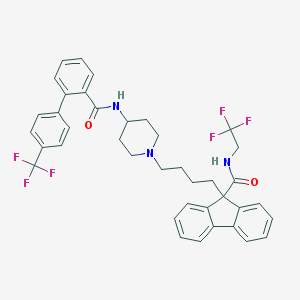
Aegerion (Cambridge, MA), the developer of lomitapide, is a publicly-traded biotech company that seeks to “change the way that rare, genetic lipid disorders are treated”. It is currently focused on the development of lomitapide, a small-molecule compound (pictured above).

Lomitapide inhibits the microsomal triglyceride transfer protein (MTTP) which is necessary for very low-density lipoprotein (VLDL) assembly and secretion in the liver. A 2007 article in the New England Journal of Medicine (NEJM) concluded that inhibition of MTTP by lomitapide (then known as BMS-201038) resulted in the reduction of LDL cholesterol levels in patients with homozygous FH. BMS-201038/lomitapide was originally developed by Bristol-Myers Squibb (BMS), donated to the University of Pennsylvania in 2003 and licensed to Aegerion in 2006. BMS had abandoned development of the compound after early Phase 1 and Phase 2 trials had found increases in heptatic fat content and gastrointestinal disturbances. The NEJM study (conducted by Penn researchers in collaboration with other academic researchers and with BMS) also found that therapy with the compound was associated with elevated liver aminotransferase levels and hepatic fat accumulation.

78-week data from Aegerion’s pivotal Phase 3 study of lomitapide in adults patients with homozygous FH were published in the online version of The Lancet on November 2, 2012.

Mipomersen (which will be called Kynamro if and when it is commercialized) is an antisense oligonucleotide that targets the messenger RNA for apolipoprotein B. We discussed mipomersen in our August 21, 2009 blog article on oligonucleotide therapeutics. Mipomersen represents the most advanced oligonucleotide drug in development that is capable of systemic delivery. (The only two marketed oligonucleotide drugs both treat ophthalmologic diseases and are delivered locally.) Mipomersen targets the liver, without the need for a delivery vehicle. Thus mipomersen–potentially the first systemically-delivered oligonucleotide drug to reach the market–represents the “great hope” for proof-of-concept for oligonucleotide drugs, including antisense and  RNAi-based drugs.

Patients treated with mipomersen, as with lomitapide, exhibit liver-related adverse effects, especially hepatic fat accumulation and elevated liver aminotransferase levels. Moreover, unlike lomitapide, which is an orally-delivered compound, mipomersen, which is delivered via subcutaneous injection, can cause injection site reactions and flu-like symptoms. Moreoever, mipomersen has a much longer half-life than lomitapide (30 days versus 20 hours).

Industry commentators, and well as the FDA Advisory Committee, generally favor lomitapide over mipomersen, because lomitapide appears to be the more efficacious drug in lowering LDL-cholesterol, and also because lomitapide is an oral drug. However, most of the FDA panelists, as well as other industry commentators believe that not all patients with homozygous FH would be likely to benefit from only one drug. Thus having two alternative drugs may well be better in treating this disease.

Both lomitapide and mipomersen have potentially serious adverse effects. A finding of elevated liver aminotransferase levels is enough to stop development of most drugs. However, the FDA and its Advisory Panel believe that a risk evaluation and mitigation strategy (REMS) would support appropriate use of these drugs in patients with homozygous FH, because of their life threatening disease, and because they have limited therapeutic options. Both Aegerion and Genzyme are proposing that their compounds be approved with REMS programs, including an education program for physicians and active monitoring of patients. The REMS program would also include monitoring to ensure that only adult homozygous FH patients would be treated with the drugs. However, Aegerion plans to conduct clinical trials of the use of lomitapide in pediatric homozygous FH patients, as well as patients with another rare disease, familial chylomicronemia. Genzyme has already tested mipomersen in a small number of pediatric patients.

Companies developing therapeutics for rare diseases whose mechanisms are related to those of more common diseases often attempt to first get their drugs approved for the rare disease, and then perform additional clinical trials to expand the drug’s indications to larger populations. We discussed this strategy in an earlier article on this blog. Homozygous FH is mechanistically related to not only heterozygous FH, but also to cases of severe hypercholesterolemia that are poorly controlled by statins. Both companies have shown interest in treating patients with homozygous FH and severe hypercholesterolemia, since they have preformed clinical trials that included patients with these conditions. However, the adverse effects of these drugs may limit their use to homozygous FH, at least in the near future.

Aegerion intends to market lomitapide on its own, and is ramping up its marketing and sales organization in anticipation of approval. Mipomersen, if approved, would have the benefit of the Sanofi marketing organization behind it. However, industry commentators expect lomitapide to have a large advantage over mipomersen, if both are approved. That is because of the greater efficacy of lomitapide, its oral dosing, and other factors related to injection site reactions for mipomersen and the half-lives of the compounds.

We await FDA action in the next several weeks on the approval of lomitapide and mipomersen.

Meanwhile, researchers and companies are working on potential drugs for severe hypercholesterolemia that act via an entirely different mechanism–PCSK9 (proprotein convertase subtilisin/kexin 9) inhibition. These drugs are in an earlier stage of development than lomitapide and mipomersen. However, they might eventually provide strong competition to these drugs, or replace them altogether.

For oligonucleotide drug developers and enthusiasts, the case of mipomersen–considered the “great hope” for proof-of-concept for oligonucleotide drugs by many in the field–provides several lessons. 1. At the end of the day, oligonucleotide drugs must meet the same standards of safety and efficacy as other drugs. 2. Oligonucleotide drugs may encounter competition from drugs in other classes, such as small molecules or monoclonal antibodies.

________________________________

As the producers of this blog, and as consultants to the biotechnology and pharmaceutical industry, Haberman Associates would like to hear from you. If you are in a biotech or pharmaceutical company, and would like a 15-20-minute, no-obligation telephone discussion of issues raised by this or other blog articles, or an initial one-to-one consultation on an issue that is key to your company’s success, please contact us by phone or e-mail. We also welcome your comments on this or any other article on this blog.