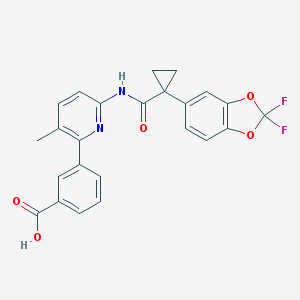
Lumacaftor (Vertex’ VX-809)

Lumacaftor (Vertex’ VX-809)

I was quoted in an article in the March 11, 2013 issue of Elsevier Business Intelligence’s The Pink Sheet by senior writer Joseph Haas. The article is entitled . A subscription is required to view the full text of this article.

The article focused on the newly-approved disease modifying drug ivacaftor (Vertex’ Kalydeco), as well as programs in drug discovery and development of disease-modifying drugs for cystic fibrosis (CF) at Vertex, PTC Therapeutics, Proteostasis Therapeutics, Pfizer, and Genzyme. It also discussed pipeline products aimed at treating or preventing life-threatening infections in CF patients at such companies as KaloBios, Insmed, and Savara.

Mr. Haas interviewed me for this article. Most of the content of our interview is available in our February 15, 2013 article on the Biopharmconsortium Blog. One company whose R&D program we did not cover in that article is Proteostasis. Proteostasis’ CF program, which is being carried out in collaboration with the Scripps Research Institute, is aimed at discovery and development of compounds that promote CFTR ΔF508 folding and trafficking. This program is in the research and lead optimization stage. We discussed R&D programs at other companies (Vertex, Pfizer) that are also aimed at correction of improper CFTR ΔF508 folding and trafficking in our February 15, 2013 article.

KaloBios’ KB001-A, a bacterial virulence factor-targeting agent

Among the agents aimed at ameliorating life-threatening infections in CF patients that were discussed in the Pink Sheet article is KB001-A, a monoclonal antibody (MAb) agent being developed by KaloBios (South San Francisco, CA). KB001-A is now in Phase 2 development for prevention of Pseudomonas aerguinosa infections in the lungs of CF patients. KB001-A targets an extracellular component of the bacterium’s type III secretion system. This system enables the bacteria to kill immune cells by injection of protein toxins into these cells.

The type III secretion system is an example of a virulence factor. Virulence factors are not expressed by a strain of pathogenic bacteria in vitro, but are expressed only when the bacteria infect a host. Once expressed, they enable the bacteria to colonize the host and cause disease.

In our June 11, 2012 article on this blog, we discussed an antibacterial drug discovery strategy aimed at targeting two related physiological systems that are important in the ability of pathogenic bacteria to cause disease, but are not essential for bacterial proliferation or survival. These systems are virulence factors and quorum sensing. At least by hypothesis, agents that disrupt these systems will prevent pathogenic bacteria from causing disease without selecting for resistant strains of the bacteria. This will give such agents an advantage over conventional antibiotics, which notoriously generate resistant strains when used to treat infections. According to the Pink Sheet article, KaloBios believes that P. aerguinosa bacteria will not develop resistance to KB001-A, which is in accord with this hypothesis.

Another issue with anti-infectives used to treat CF that is discussed in the Pink Sheet article is the definition of a “disease-modifying” agent for CF. We define disease-modifying agents as drugs that ameliorate or cure a disease by targeting the root cause of that disease. However, KaloBios considers KB001-A to be a disease-modifying agent. That is because the company believes that most CF patients die of the effects of P. aerguinosa infection, which causes deterioration of the patients’s lungs. Thus an effective anti-P. aerguinosa agent may produce dramatic increases in patients’ lifespans.

Perhaps the real issue is that one should not classify CF drugs as “disease-modifying” agent and agents that merely treat “symptoms” (as is done in the Pink Sheet article) but should define infections of CF patients as “complications” of the disease. Thus anti-infectives such as KB001-A may effectively treat a major life-threatening complication of CF, without modifying the underlying disease. Such an agent would result in increased lifespans (and improved quality of life) for CF patients, without affecting their underlying disease. As KaloBios asserts, anti-infective agents like KB001-A would be complementary to such disease-modifying agents as ivacaftor.

________________________________

As the producers of this blog, and as consultants to the biotechnology and pharmaceutical industry, Haberman Associates would like to hear from you. If you are in a biotech or pharmaceutical company, and would like a 15-20-minute, no-obligation telephone discussion of issues raised by this or other blog articles, or an initial one-to-one consultation on an issue that is key to your company’s success, please contact us by phone or e-mail. We also welcome your comments on this or any other article on this blog.

 

Agios Germanos, Greece. Source: http://bit.ly/YRDIBJ

Agios Germanos, Greece. Source: http://bit.ly/YRDIBJ

I was quoted in an article in the November 19, 2012 issue of Chemical & Engineering News (C&EN) by senior editor Lisa M Jarvis. The article is entitled

The article focuses on Agios Pharmaceuticals’ (Cambridge, MA) strategy for building a company that can endure as an independent firm over a long period of time, and that can also demonstrate sustained performance.

This contrasts with the recent trend toward “virtual biotech companies”–lean companies with only a very few employees that outsource most of their functions, and that are designed for early acquisition by a Big Pharma or large biotech company. The virtual company strategy is designed to deal with the inability of most young biotech companies to go public in the current financial environment. Without the ability to go public, young companies cannot provide early-stage venture capital investors with a profitable exit within a few years after launching the company. Virtual companies typically have a few assets, such as molecules that are ready for preclinical studies or early clinical trials. The goal is to obtain enough evidence that their compounds can become drugs to interest a Big Pharma.

In contrast, there are a few young  “platform companies” that are built on a broad technology platform, which aim to address important areas of biology and potentially to develop numerous products with the potential to address important areas of unmet medical need. One of these is Agios.

“Built to Last” in the current biotech ecosystem

In the C&EN article, I was quoted as saying that only a few platform companies have been launched in recent years. In the Boston area, in addition to Agios, such companies include Forma Therapeutics and Aileron Therapeutics. I was further quoted as saying “These companies are built to last.”

That brings up the old business paradigm from the 1990s and early 2000s–“Built to Last” versus “Built to Flip”. Those involved in building virtual biotech companies–especially venture capitalists and angel investors–do not like the use of “Built to Flip” to characterize their companies. And there are some fine virtual biotechs–some, such as Energesis and Zafgen–which we have covered in our blog.

(Plexxikon, the developer of targeted melanoma drug vemurafenib, also operated as a virtual company. However, it had a technology platform, and had the potential to become an independent biotech with marketed products. Thus Plexxikon did not fit the usual “virtual biotech model”. Nevertheless, it was acquired by Daiichi Sankyo in 2011.)

However, some industry commentators believe that “Built to Flip” is an appropriate designation for virtual biotech companies, and that the virtual model is likely to be detrimental to drug discovery and to the biotech/pharma industry as a whole.

Meanwhile, the 2012 BIO International Convention in Boston had a session entitled “Moving the Goal Posts: How to Build a Free-Standing Biotech from Scratch in Today’s Environment.” This session focused on how to build the “next Vertex or even the next Genentech” (i.e., a “Built to Last” biotech company) in today’s environment. John Evans, the Vice President of Business Development & Operations of Agios was a speaker at that session. The session was moderated by Bruce Booth of Atlas Ventures. Thus, despite the preference for lean virtual biotech companies in the current funding environment, there is an interest in the entrepreneurial and venture capital communities for how free-standing biotechs might emerge under current conditions.

How to build a young platform biotech company

The Biopharmconsortium Blog has included three articles about Agios:

These articles, as well as the November 19 2012 C&EN article, outline how Agios has been building a free-standing biotech in today’s unfavorable environment. Agios’ strategy is based on three elements:

  • A stellar group of scientific founders–Drs. Craig B. Thompson, Tak W. Mak, and Lewis C. Cantley.
  • A strong proprietary technology platform based on cancer metabolism
  • A financing strategy that includes both venture capital and partnerships with established companies. In the case of Agios, their partner is Celgene. The Agios/Celgene partnership provides Agios with $150 million, and allows Agios to maintain control over the direction of its early stage research.

As stated in the C&EN article, the financial security gained via Agios’ funding by its venture investors and by Celgene enables Agios to work on multiple potential targets, with the goal of dominating the field of cancer metabolism. Agios focuses on two types of targets: metabolic enzyme species that are found only in cancer cells, and enzyme species on which a cancer cell has become dependent. Agios researchers intend to develop drugs against targets for which their are predictive biomarkers that identify the right patients for clinical studies.

New developments outlined in the November 19, 2012 C&EN article

Both the November 19, 2012 C&EN article and our Bipharmconsortium Blog articles outline Agios’ program to target a mutated form of isocitrate dehydrogenase 1 (IDH1), which together with mutated IDH2 has been implicated in 70% of human brain cancers. As stated in the C&EN article, Agios researchers have recently reported a series of compounds that selectively inhibit the mutant form of IDH1. This research had been carried out in collaboration with researchers from Ember Therapeutics (Watertown, MA). As we stated in another Biopharmconsortium Blog article, Ember specializes in targeting beige adipocytes for treatment of metabolic diseases.

As we noted in our November 30, 2011 Biopharmconsortium Blog article, Agios had slated a portion of the $78 million that it raised in its Series C financing to expand its R&D efforts into inborn errors of metabolism (IEMs). IEMs comprise a large class of inherited disorders of metabolism, most of which are defects in single genes that code for metabolic enzymes. These rare metabolic diseases have a high level of unmet medical need.

As outlined in the C&EN article, Agios’ work with mutant IDH1 and IDH2 is serving as a bridge to the company’s programs in IEMs. IDH2 mutations have been found in a class of children with 2-hydroxyglutaric aciduria, a rare inherited neurometabolic disorder that can cause developmental delay, epilepsy, and a set of other pathologies.

According to the C&EN article, IEMs are of special strategic interest to Agios. Agios CEO David Schenkein stated that expanding the company’s R&D efforts into IEMs helps the company to manage the risk profile of its portfolio. In the case of cancer, Agios researchers must identify and validate targets involved in the pathobiology of these diseases, and then to find drugs that modulate these targets. In the case of IEMs, disease biology is already validated by genetics.

Moreover, IEMs have small patient populations. Thus only small clinical trials are needed to bring a drug to market. Agios therefore believes that it can bring drugs for these diseases to market on its own, without the need for a larger partner such as Celgene or a Big Pharma.

As we discussed in a Biopharmconsortium Blog article on improving the clinical trial system, although rare diseases only require small clinical trials, finding and recruiting patients for the trials is made more difficult because of the very small number of patients with a particular disease. One solution is to work with patient advocates and “disease organizations”, some of which have patient registries. In the case of 2-hydroxyglutaric aciduria and other organic acidemias, a “disease organization” exists–the Organic Acidemia Association (OAA). Perhaps Agios will find it fruitful to work with the OAA in its patient recruitment efforts.

Currently, Agios is focused on getting compounds into the clinic–both for IEMs and for cancer. Looking down the road, the company’s $180 million war chest should enable Agios to put several compounds through proof-of-concept studies, according to Dr. Schenkein. (This is besides any cancer drug candidates that are licensed by Celgene.) Despite Agios’ strategy of conducting small trials for IEM drug candidates, Dr. Schenkein said that the company will eventually need to go public to achieve its strategic goal of dominating the cancer metabolism field.

________________________________

As the producers of this blog, and as consultants to the biotechnology and pharmaceutical industry, Haberman Associates would like to hear from you. If you are in a biotech or pharmaceutical company, and would like a 15-20-minute, no-obligation telephone discussion of issues raised by this or other blog articles, or an initial one-to-one consultation on an issue that is key to your company’s success, please contact us by phone or e-mail.  We also welcome your comments on this or any other article on this blog

habermanassoc_logo

A few weeks ago, I attended a presentation that was produced by another consulting firm, which we shall call Company X. They began their presentation with a discussion of “what is Company X?” Then they went on the the substance of their presentation.

In the same vein, as the producers of the Biopharmconsortium Blog, this article is entitled “What is Haberman Associates?” After we have posted this article, we also shall go on to our usual subject matter.

Haberman Associates is a Boston-based consulting firm, founded in 1993, that specializes in science and technology strategy for life science companies–principally pharmaceutical, biotechnology, diagnostics, and research products companies, and other companies (e.g., life science publishers, venture capitalists, angel investors, etc.) that serve the industry.

The focus of our company is new product development and commercialization. This includes new products developed via internal R&D and through partnering. In internal R&D, our usual focus is toward the early end of the process–drug discovery and early development.

Clients have used our consulting services to help them:

  • discover and develop new drugs, diagnostics, and research products
  • improve their drug pipelines
  • identify and evaluate potential partners
  • develop new applications for their technologies
  • penetrate new markets

Haberman Associates is a member the Boston-based Biopharmaceutical Consortium (BPC) and an Affiliate of the North Carolina-based consulting consortium Innovalyst. Our relationship with Innovalyst began after one of our BPC partners moved to North Carolina, and eventually became a Principal of Innovalyst. Between BPC and Innovalyst, we have nearly 90 senior consultants on our team.

We have worked on consulting engagements with both BPC and Innovalyst consultants.  Our relationship with these consortia enables us to take on larger projects, as well as projects requiring multiple types of expertise.

One of my Innovalyst colleagues referred to the Haberman Associates/Innovalyst combination as a “virtual drug discovery and development organization”. Another way to look at the Haberman Associates/Innovalyst combination is as having to power of a single office of a large consulting firm, but one dedicated to helping pharmaceutical and biotechnology clients to increase their effectiveness in the difficult areas of drug discovery and development.

In one case last year, a prospective client asked me whether Haberman Associates could take on a consulting engagement involving GMP services. I know little about that subject, other than where it fits into the process of developing a drug. I also know people who work in that area. So I handed the engagement over to another project leader in Innovalyst. He formed a team that included himself, several domain experts (one of whom knows the Chinese GMP services market), and me.  Although I knew little about GMP services, I used my research and interviewing skills, and made a material contribution to the project. Our team delivered a result that exceeded client expectations.

We always aim to exceed client expectations, whatever the project.

In addition to consulting, Haberman Associates has produced numerous publications–ranging from articles to book-length reports–which have been published by leading life science industry publishers. A list of recent publications is now available on my public LinkedIn profile.

As for the Biopharmconsortium Blog, it is the blog for our consulting group, not a journalistic blog. Despite the diversity of subjects covered by the blog, the focus is on effective drug discovery and development, and on company strategies designed to facilitate effective new product development. We have more good content available than we can possibly blog about, and do not accept requests to blog about content that is irrelevant to our focus.

We hope that the diverse community of our readers will benefit from the discussions on our blog. We also hope that potential clients in the life science industry will get a feeling for how we approach issues in drug discovery and development and company strategies.

However, even the best articles or books on how to solve key industry problems (such as clinical attrition) will not solve these problems on their own. Companies need to develop company-specific solutions and to implement them. For various reasons, they often are unable to do this without outside consulting help. Haberman Associates consulting may enable your company to formulate and implement the solutions you need to improve your productivity.

[Innovalyst ceased to be active as an organization as of February 2013. However, we remain in contact with several Innovalyst Affiliates and Managing Partners, who are available for collaboration with Haberman Associates.]


If you are in  a life sciences firm, and have questions about Haberman Associates, or wish to send us a consulting inquiry or to commission us to write a report for publication, please telephone or e-mail us.


Quorum sensing synthetic biology project http://bit.ly/LO1ynR

Way back in May 2000, Decision Resources published my short report entitled “New approaches to small-molecule antibacterial drug discovery” as part of its Spectrum Life Sciences series. As might be expected, the report is now out of print.

The report was a brief review of then-novel approaches to antibacterial drug discovery, in the face of the increasing level of antibiotic resistance in pathogenic bacteria. These approaches included genomics and such technologies as high-throughput screening against bacterial-specific targets.

However, the most interesting part of the report was a section on using the study of bacterial physiology to identify targets that are important for the ability of bacteria to cause disease, but are not essential for bacterial proliferation or survival. The hypothesis behind these studies was that it might be possible to develop compounds that prevent these bacteria from causing disease, without selecting for resistant strains of the bacteria.

Antibiotics typically kill or prevent proliferation of bacteria by targeting biomolecules involved in such essential processes as cell wall synthesis, DNA proliferation, or protein synthesis. Treating large populations of bacteria with such agents inevitably selects for a few resistant mutant cells. These proliferate, mutate further, and give rise to antibiotic resistant populations. However, if a therapeutic targets a nonessential pathway that is involved in pathogenesis, resistant populations might not be selected for. That was the hypothesis.

This field of bacterial physiology for drug discovery focused on two related areas–virulence factors and quorum sensing. Virulence factors are not expressed by a strain of pathogenic bacteria in vitro, but are expressed only when the bacteria infect a host. Once expressed, they enable the bacteria to colonize the host and cause disease. Examples of such virulence factors include secretion systems that deliver bacterial effector proteins into host cells. These effector proteins may, for example, kill host cells, inhibit cytokine production or phagocytosis, or may mediate bacterial entry into the host cells.

Quorum sensing is a system by which certain bacteria can monitor their own population density. They accomplish this by secreting specific autoinducer molecules. When the concentration of an autoinducer reaches a critical threshold value (as the result of an increase in bacterial population density), it triggers specific response systems, causing the induction of sets of genes that are only expressed at high population density.

For example, many gram-negative bacteria (e.g., Pseudomonas aeruginosa, Vibrio cholerae, and Escherichia coli) use specific acyl homoserine lactones (AHSLs) as their autoinducers. P. aeruginosa has two quorum sensing systems that use the AHSL autoinducers butyrylhomoserinelactone and 3-oxododecanoylhomoserinelactone, respectively. These systems (operating via specific receptors for the auotoinducers and interacting with each other) control the induction of several genes, some of which are virulence factors. Some of these genes enable the bacteria, when they are at sufficient density, to form biofilms (slimy mats of bacteria and polysaccharide matrix).

P. aeruginosa is an opportunistic pathogen, causing infection in the lungs of people with cystic fibrosis, burn patients, and other hospitalized patients. These infections cause death in over 80% of cystic fibrosis patients. The ability to form biofilms renders the bacteria resistant to antibiotics and to the patient’s own immune system.

Other gram-negative bacteria that form biofilms have been implicated in dental caries, peridontitis, osteomyelitis, and numerous nosocomial infections. Bacterial biofilms can also form on the surface of implanted medical devices, such as catheters and mechanical heart valves, and cause device-related infections.

The gram-positive human pathogen Staphylococcus aureus also has a quorum sensing system. However, it does not use an AHSL as an autoinducer. The S. aureus autoinducers are peptides that contain an unusual thiolactone structure (i.e., a thol ester-linked cyclic structure). The S. aureus quorum sensing system controls the synthesis of virulence factors responsible for the pathogenicity of this organism in vivo. Although specific peptides induce virulence factors in a given strain of S. aureus, there are other specific peptides that inhibit the induction of virulence in strains of the organism other than the one secreting the inhibitory peptides. That finding suggested that researchers should be able to develop specific agents to shut down S. aureus pathogenesis by targeting the quorum sensing system.

Interestingly, quorum sensing-based systems have been used in projects for the International Genetically Engineered Machine (iGEM) competition, an annual undergraduate synthetic biology competition. See the figure above, which was taken from the 2009 Chiba University (Japan) iGEM project.  [http://2009.igem.org/Team:Chiba/Project/Signaling-system]

Quorum Sciences and Vertex Pharmaceuticals’ research on quorum sensing

At the time of the writing and publication of our antibacterial drug discovery report, there was a company, Quorum Sciences (Iowa City, IA) that had been established to commercialize the findings of leading researchers on bacterial quorum sensing. As the result of two successive acquisitions in 2000 and 2001, Quorum Sciences passed into the hands of Vertex Pharmaceuticals (Cambridge, MA). In 2006, Vertex researchers and their academic collaborators published a report on the discovery of novel specific inhibitors of the P. aeruginosa quorum sensing system. The last author of this report was quorum sensing pioneer E. Peter Greenberg, formerly of the University of Iowa and chief scientific officer at Quorum Sciences, and from 2005 to the present at the University of Washington School of Medicine. The compounds identified in the 2006 report, discovered via high-throughput screening of a diverse 200,000-compound chemical library, resembled the natural AHSL that binds to the P. aeruginosa quorum sensing receptor LasR. (LasR is a transcription factor that when bound to its specific AHSL, mediates the expression of a set of downstream genes, including those that encode virulence factors.) The researchers concluded that the novel quorum sensing inhibitors might be useful chemical tools, but not drug leads.

In 2010, other academic researchers published a report on the discovery of novel antagonists and agonists of the P. aeruginosa quorum sensing receptor LasR, which were of lower molecular weight and otherwise structurally distinct from the natural P. aeruginosa AHSL. However, these compounds were still deemed to be scaffolds for chemical tools, not drug leads. Nevertheless, the researchers speculated that the compounds “could, with further development, provide a pathway for the design of novel antivirulence agents”. Other researchers are continuing studies aimed at discovery of quorum sensing receptor antagonists, whether synthetic organic molecules or natural products. These involve studies with quorum sensing systems of both gram-positive and gram-negative bacteria.

The 2006 report appears to be the last Vertex publication on quorum sensing. However, Vertex continues to conduct research on antibacterial agents. And the company has a facility in the University of Iowa BioVentures Center (Coralville, IA),  which is a continuation of the old Quorum Sciences Iowa facility. As of 2009, Vertex’s Iowa-based team consisted of seven full-time scientists, working on development of antibacterials, and agents to treat hepatitis C and cystic fibrosis, among other areas. The Iowa group participated in the development of Vertex’ now-marketed anti-hepatitis C virus (HCV) agent Incivek (telaprevir).

The May 2012 article “Freezing Time” in The Scientist, and discovery of novel quorum sensing inhibitors

The May 2012 issue of The Scientist contains an article entitled “Freezing Time”, by Vern L Schramm, Ph.D. (Albert Einstein College of Medicine (Bronx, NY). The article focused on design of “transition state analogues”, i.e., compounds with a chemical structure that resembles the transition state of a substrate in an enzyme-catalyzed reaction. Transition state analogs usually act as enzyme inhibitors by blocking the enzyme’s active site. They are exquisitely potent and specific inhibitors, which act at extremely small doses. This makes these compounds potentially attractive as drugs.

A transition state analogue inhibitor that was designed by Dr. Schramm and his colleagues in the early 2000s as an early proof-of-concept molecule is immucillin-H, or forodesine. This is a transition-state analog inhibitor of purine nucleoside phosphorylase.  Forodesine is being developed by BioCryst Pharmaceuticals for treatment of relapsed B-cell chronic lymphocytic leukemia, and the results of a Phase 2 trial were published in 2010.

As described in Dr. Schramm’s May 2012 article, his laboratory has been applying their transition-state analogue technology to the field of quorum sensing in bacteria. Instead of targeting the recognition of AHSLs by quorum sensing receptors such as LasR, the researchers targeted the key enzyme in the AHSL biosynthesis pathway in gram-negative bacteria, known as 5′-methylthioadenosine nucleosidase (MTAN). The biosynthetic pathway for the production of AHSLs, including the key role of MTAN, had been elucidated by Dr. Greenberg and his colleagues in the late 1990s.

Dr. Schramm and his colleagues published the results of studies of three transition state analogues that potently inhibited MTANs of gram-negative bacteria. For example, they inhibited the Vibrio cholerae MTAN with dissociation constants of 73, 70, and 208 pM, respectively. They inhibited MTAN in cell of a virulent strain of V. cholerae with IC50 values of 27, 31, and 6 nM respectively, disrupting autoinducer production in a dose-dependent manner without affecting bacterial growth. The compounds were also potent inhibitors of autoinducer production in an enterohemorrhagic strain of Escherichia coli. The transition-state analogues did not inhibit growth in either V. cholerae or E. coli, but one such compound reduced biofilm production by 18% in E. coli and 71% in V. cholerae.

Moreover, the MTAN inhibitors did not appear to select for bacterial resistance in vitro. When V. cholerae bacteria were grown for 26 generations in the presence of a large excess of MTAN inhibitors, subsequent generations of these bacteria were equally sensitive to inhibition by these compounds as bacteria that had not been previously exposed to the inhibitors. These results are consistent with the hypothesis that agents that inhibit targets that are important in the ability of bacteria to cause disease, but are not essential for bacterial proliferation or survival might not select for drug resistance.

As Dr. Schramm said in the May 2012 article in The Scientist, it remains to be seen whether the MTAN-targeting transition-state analogs developed in his laboratory can translate into novel antibiotics that do not select for resistant pathogens. As of March 2009, Dr. Schramm’s team had developed over 20 potent MTAN inhibitors, which will be specific for bacteria and should have no effect on human metabolism. These compounds have been licensed to Pico Pharmaceuticals (Melbourne, Australia), which plans to develop and initiate clinical trials. Dr. Schramm is a Pico Pharmaceuticals co-founder and chairman of its scientific advisory board. Pico claims that one of its quorum sensing inhibitors, designated as PC0208, has demonstrated proof-of-concept in preclinical studies, and now has “pre-IND” status.

Lessons from these studies

Dr. Schramm’s discovery of novel quorum sensing inhibitors was made possible by a strategy that involved a combination of biology-driven drug discovery and sophisticated chemistry technology. The biology-driven drug discovery strategy involved a combination of 1. Building on the quorum sensing studies of Dr. Greenberg and others, and adopting the strategy, as reviewed in our 2000 Spectrum report, of targeting the quorum sensing system in order to discover agents that would have the possibility of not triggering resistance, and 2. Targeting a critical, bacterial-specific pathway enzyme that is upstream of the recognition of AHSLs by quorum sensing receptors (the usual target of most researchers in this area). This enzyme, MTAN, has a key role in the biosynthesis of AHSLs.

The sophisticated chemical technology employed by Dr. Schramm and his colleagues was of course the transition state analogue technology developed in his own laboratory. Combined with the biology-driven strategy described in the last paragraph, Dr. Schramm’s approach has succeeded in the discovery of compounds that are potential drug candidates, while approaches based on high-throughput screening for AHSL antagonists have so far failed to produce any such compounds. Dr. Scharamm’s laboratory has also obtained evidence that treatment with their compounds should not result in the selection of resistant strains of pathogenic bacteria.

It is possible that other chemistry approaches might be successfully employed to discover quorum sensing inhibitors, both for gram-negative bacteria and gram-positive organisms such as S. aureus.

As we have discussed in numerous articles on this blog, biology-driven drug discovery strategies, often coupled with innovative approaches to chemistry (in the case of small-molecule drug discovery) are applicable to very many different targets involved in a whole range of human diseases. (Biology-driven drug discovery has also been central to discovery and development of many successful large-molecule drugs.) The quorum sensing case study in this article is a simple, understandable, and elegant example of such a strategy.

In addition to the scientific, clinical, and medical aspects of antibacterial drug discovery, the other major issue is the business of antibacterial discovery and development. The economics of drug discovery and development have shifted pharmaceutical industry investment away from the development of drugs targeting short course therapies for acute diseases (such as antibacterials) and towards long-term treatment of chronic conditions.  At the same time, discovery of novel antibacterials has gotten more difficult. As a result, during the 2000-2010 period, such companies as Wyeth, Aventis, Eli Lilly, GlaxoSmithKline, Bristol-Myers Squibb, Abbott Laboratories, Proctor & Gamble, and Merck have either deprioritized anti-bacterial R&D or left the field altogether. Meanwhile, antibiotic resistance, which was a problem in 2000, has become an even greater problem in 2012, in some cases reaching crisis proportions [e.g, methicillin resistant S. aureus (MRSA) that is also resistant to the drug of last resort, vancomycin].

As a result of these economic, scientific, and medical challenges, a €223.7 consortium of five pharmaceutical companies and leading academics, called NewDrugs4BagBugs (ND4BB) was launched in Europe in May 2012. The program is envisioned to involve a three-stage approach – to improve the understanding of antimicrobial resistance, to design and implement efficient clinical trials, and finally, to take novel drug candidates through clinical development.

And at least one venture capitalist has observed that biotechs that specialize in antibacterial drug development (as well as those that specialize in other areas that have been deemphasized by Big Pharmas) have provided “contrarian opportunities” in biotech venture. According to a June 2 2012 article by Bruce Booth of Atlas Venture published in Forbes, what has been deprioritized by some (or several) Big Pharmas, are likely be re-prioritized by others several years later. Such antibacterial drug developers as Calixa, Cerexa, Novexel, Neutec, Paratek, Pennisula, Protez, and Vicuron have produced some of the best returns in biotech venture capital from merger/acquisition exits. These biotechs included companies that were built around compounds outlicensed from Big Pharma, and others that conducted new research on novel targets, especially for MRSA and other resistant bacteria.  By taking advantage of a strategic depriorization in Pharma, these biotechs and their venture backers were able to create considerable value in the past decade out of antibacterial drug development.

Meanwhile, antibiotic specialist Cubist Pharmaceuticals (Lexington, MA) remains an independent, and profitable, biotech company that is continuing to conduct R&D, including on discovery and development of agents to treat pathogens that are resistant to current antibiotics. It has expanded into development and marketing of peripheral mu-opioid receptor antagonists (including via acquisition of Adolor in 2011), and has recently expanded its R&D facilities.

Can Pico Pharmaceuticals (which has oncology programs in addition to antibacterials) experience similar success?

__________________________________________

As the producers of this blog, and as consultants to the biotechnology and pharmaceutical industry, Haberman Associates would like to hear from you. If you are in a biotech or pharmaceutical company, and would like a 15-20-minute, no-obligation telephone discussion of issues raised by this or other blog articles, or of other issues that are important to  your company, please contact us by phone or e-mail. We also welcome your comments on this or any other article on this blog.


Eltrombopag

On April 13, 2012, Informa’s Scrip Insights the publication of a new book-length report, Advances in the Discovery of Protein-Protein Interaction Modulators, by Allan B. Haberman, Ph.D.

Protein-protein interactions (PPIs) are of central importance in biochemical pathways, including pathways involved in disease processes. However, PPIs have been considered the prototypical “undruggable” or “challenging” targets. The discovery of small-molecule drugs that can serve as antagonists or agonists of PPIs, and which are capable of being successfully taken into human clinical trials, has been extremely difficult. Among the theoretical reasons for this is that contact surfaces involved in PPIs are usually large and flat, and lack the types of cavities present in the surfaces of proteins that bind to small-molecule ligands.

Nevertheless, over the last twenty years, researchers have developed a set of technologies and strategies that have enabled them, in a several cases, to discover developable small-molecule PPI modulators. One direct PPI agonist, the thrombopoietin mimetic eltrombopag (Ligand/GlaxoSmithKline’s Promacta/Revolade), has reached the market. The chemical structure of this compound is illustrated in the figure above. Several other small-molecule PPI modulators are in clinical trials. Despite this progress, the discovery and development of small-molecule PPI modulators has been one-at-a-time, slow and laborious.

The new strategic importance of protein-protein interactions as drug targets

Meanwhile, PPIs as potential drug targets have acquired a key strategic importance for the success of the pharmaceutical industry. Over at least the last decade, pharmaceutical R&D has failed to develop enough high-valued new drugs to make up for or exceed revenues from blockbusters that are losing patent protection. As we have discussed in previous publications and in , this low productivity is mainly due to pipeline attrition. There are several factors (ranging from target selection through drug design, preclinical studies, identification and use of biomarkers, and design of clinical trials) that can influence pipeline attrition.

However, increasing numbers of industry leaders and analysts identify target selection as the key factor that is limiting the productivity of pharmaceutical R&D. For example, I served as a workshop leader at Hanson Wade’s   last summer, which took that point of view. There are at least several such conferences throughout the year, which are organized at the request of industry leaders.

Industry experts who identify poor target selection as a major cause of pharma R&D’s productivity woes conclude that the main issue is that companies are running out of “druggable” targets that have not already been addressed by marketed drugs. As of 2011, only 2% of human proteins have been targeted with drugs. Most of the remaining disease-relevant proteins, including transcription factors and many other types of signaling proteins, work via interacting with other proteins in PPIs. Therefore, in order to reverse its R&D slump, the pharmaceutical industry needs to develop technologies and strategies to address PPIs and other hitherto “undruggable” targets.

Contents of the report

Our report discusses technologies and strategies that enable the discovery of drugs targeting PPIs, including both small-molecule and synthetic peptidic modulators. It includes case studies on the discovery of compounds that address specific target classes, with emphasis on agents that have reached human clinical studies. This includes addressing the issue of the need to produce PPI modulatory agents that have pharmacological properties that will enable them to be good clinical candidates.

The report also includes discussions of second-generation technologies for the discovery of small-molecule and peptidic PPI modulators, which have been developed by such companies as Forma, Ensemble, and Aileron, and by academic laboratories. The field of PPI modulator discovery has represented a “premature technology”, i.e., a field of biomedical science in which consistent practicable therapeutic applications are in the indefinite future, due to difficult technological hurdles. We have discussed premature technologies on earlier on this blog. The second-generation technologies are designed to overcome the hurdles and to thus enable a more accelerated and systematic approach to PPI drug discovery and development.

In part as the result of the development of these technologies, and of the increasing strategic importance of PPI modulator development, companies have been moving into the field. Examples include Bristol-Myers Squibb, Pfizer, Novartis, and Roche. A key issue is to what extent the new technologies for PPI modulator R&D will enable this area to be commercially successful, and to meet the strategic needs of the industry for expanding the universe of targets for which drugs can be developed.

To see the report Advances in the Discovery of Protein-Protein Interaction Modulators, please click here.

__________________________________________

As the producers of this blog, and as consultants to the biotechnology and pharmaceutical industry, Haberman Associates would like to hear from you. If you are in a biotech or pharmaceutical company, and would like a 15-20-minute, no-obligation telephone discussion of issues raised by this or other blog articles, or of other issues that are important to  your company, please click here. We also welcome your comments on this or any other article on this blog.